ALL TICKETS MUST BE BOOKED IN ADVANCE ONLINE – CLICK HERE TO BOOK
As well as being a working farm we also love opening our gates and holding a range of events. We run workshops all year round right here on our farm and grounds. From Spring to Christmas, there’s always something to do!
Take part in one of our brilliant workshops, led by our very own basket makers, spinners and weavers. Learn new skills, ask questions and make new friends during your time at Cornstown House – we can’t wait to welcome you!
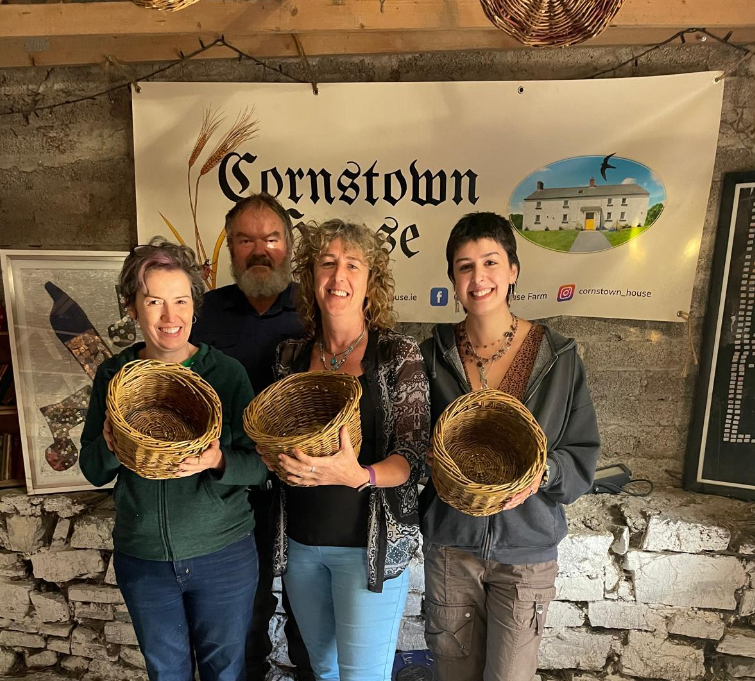
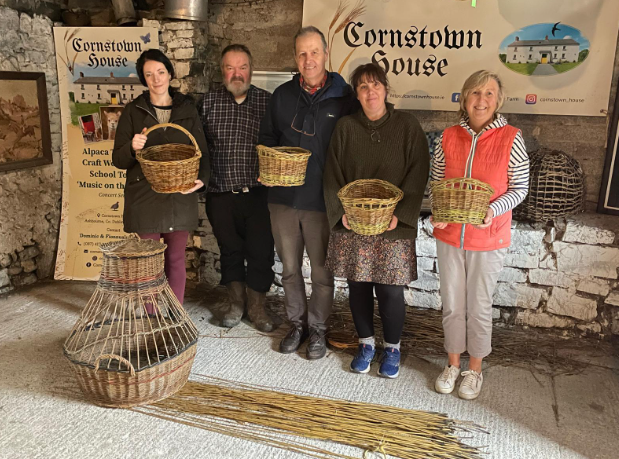
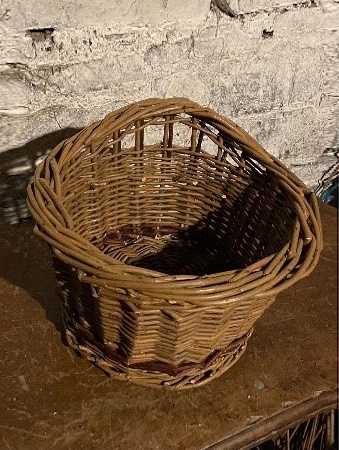
You will make a beautiful basket and have fun learning a new craft. The day includes full instruction and materials. All attendees will go home with a completely unique, handmade item. Tea, coffee and lunch are provided so please let us know if you have any dietary needs. The workshop takes place in the Long House on the farm. You also get to meet the animals that live on the farm, including any new babies!
Weaving workshops make great gifts either for yourself or for your friends.
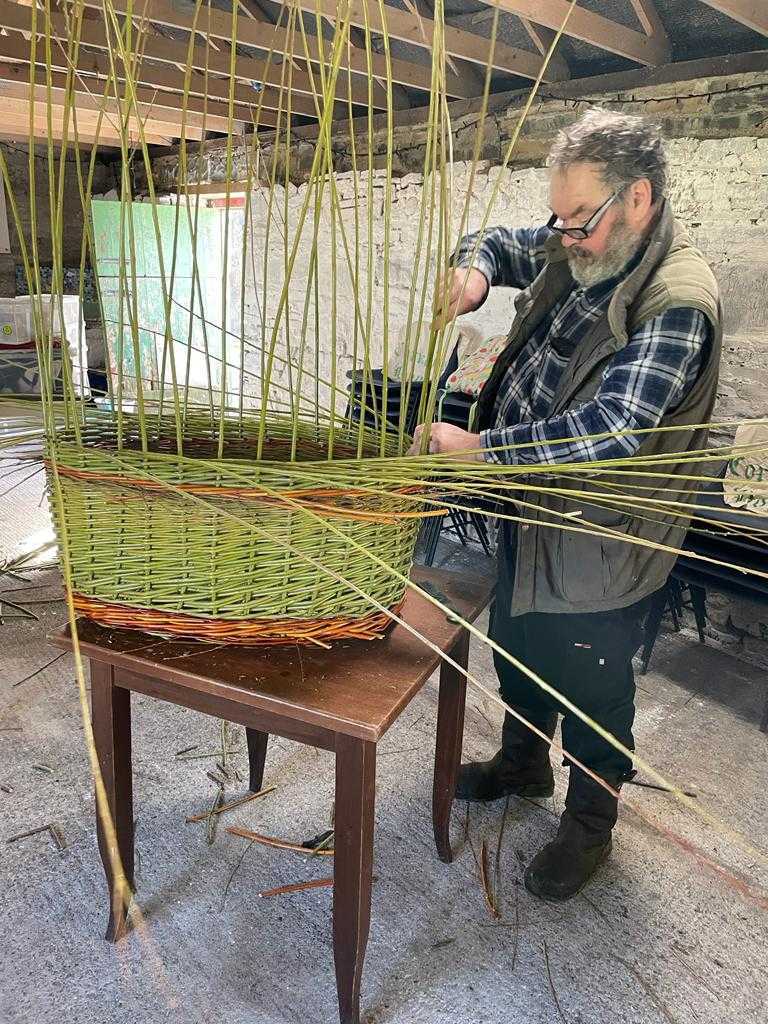
Traditional Irish baskets are made from Willow. A willow rod is also known as a Sally Rod and the place where the willow grows is know as the Sally Garden. Most of the willow we use on the farm is grown to the left of the entrance as you drive in so don’t forget to have a look!
All tools and willow will be provided for you on the day. The tools will remain the property of the farm and remain in the workshop but you will take home your beautiful basket.
In our workshop, willow is used to make the basket. Most of the willow we use is grown on the farm in our Sally Garden.
However, baskets can be weaved with a wide range of materials such as…
Twining can be used to hold the base in place or to build the walls of a basket.
Twill is a technique where the weaver goes under one and over two around the basket, alternating as they proceed with the rows.
Like tension in knitting, you develop an even tension with practice. BUT it’s very easy to develop this!
The key is to always pack down each stitch as you weave it. Bring the weaver over the first spoke and under the next spoke, and pack it down right then. This means: don’t try to weave a whole row of a basket loosely above the rest of the weaving, and then plan on packing it down after the fact. This type of shortcut doesn’t work and will only result in a loose, lumpy basket.
In contrast, if you pull on your weaver too tightly, it will develop too tight of a tension. Tight tension results in baskets that taper inward too much at the top, instead of remaining vertical or flaring out slightly.
So what the BEST way to achieve even tension?
The very best way is to ENJOY your basketry. Don’t be tense about the fact that it’s your very first basket! Stop and look at it after each row. This keeps you on track. You should weave the basket. Not vice-versa! Remember that it’s easy to take apart anything that you don’t like, so go ahead and un-weave when you need to. Also, be sure to re-soak the basket as it needs it. This will not only revive the basket with added moisture, but it will revive YOU with a necessary break. After the first basket, we promise – you’ll be so excited about your achievement that you’ll be ready to weave anything!
Spin with Trish Kerr of Irish Alpaca Yarns in this one day workshop from 10am to 4pm.
Our alpaca wool spinning workshop will introduce you to the ancient tradition of hand spinning. You will work with alpaca fibre, a beautifully soft, strong natural fibre that makes wonderful yarn for either knitting or weaving. Our alpaca fibre is produced on the farm.
Tea, coffee and lunch are provided so please let us know if you have any dietary requirements.
All materials and tools supplied. Places are limited.
The best way to learn is to take a class!
Cornstown House’s Spinning Workshop is excellent for beginners and experienced spinners alike, as each student will be able to access any guidance they may need throughout the workshop.
We have a maximum of 8 places to ensure each student can access help if needed.
The day runs from 10am – 4pm and you are welcome to take breaks as you wish. Lunch will also be provided by the farm as part of this workshop so please notify us of any dietary requirements.
All materials and tools are supplied on the day so just bring yourself!
Alpaca fibre is among the finest fibre in the world. Soft and long and in a range of beautiful natural colours, alpaca can be a joy to spin if you know where to start and what makes it different from sheep’s wool.
Alpaca fleece is a lovely fibre to work with, we breed for colour and fineness in our herd and have many varied fleeces for you to choose from.
The workshop is a beginners’ weaving workshop. Weave with Máire Ní Neachtáin and Trish Kerr of Irish Alpaca Yarns in this one day workshop from 10am to 4pm.
Our workshop will introduce you to weaving on a rigid heddle loom. You will learn how to choose your yarns and set up the loom before weaving a piece which you will take home.
Tea, coffee and lunch are provided so please let us know if you have any dietary requirements.
All materials and tools supplied. Places are limited.
A rigid heddle loom is a type of weaving loom that combines functionality and simplicity. It gets its name from the rigid heddle, which allows the weaver to easily lift and lower the warp threads. The rigid heddle also spreads the warp to a fixed width and consistently spaces the yarn. This type of loom is easy to set up, portable, and relatively inexpensive, making it an excellent choice for beginners.
The rigid heddle loom is versatile and allows you to use a wide variety of yarns. Almost any yarn can be used for the weft (the yarns you weave with), but for the warp (the yarns held taut on the loom), you need to ensure the yarn can withstand the tension. To test this, pinch both ends of a 4- to 6-inch section of the yarn and apply steady, firm pressure. If the yarn drifts apart or breaks, it’s not suitable for warp.
The process of threading the loom is called “warping.” The quickest way to warp a rigid heddle loom is the direct warping method. This involves threading the warp yarns directly through the slots and holes of the rigid heddle. There are various resources available, including videos and books, that provide step-by-step instructions on how to warp a rigid heddle loom.